Alheit Vineyards
Few names carry as much weight in the modern Cape wine story as Alheit Vineyards. Founded in 2010 by husband and wife Chris and Suzaan Alheit, the project set out to map South Africa's surviving old-vine sites and bottle them as honestly as possible. Sixteen years on, Alheit is regarded as one of the country's defining producers of terroir-driven, minimal-intervention white wine, built almost entirely on Chenin Blanc and Semillon from dry-farmed bush vines scattered across the Western Cape.
Philosophy and Winemaking
"Built on restraint"
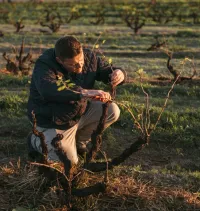
Alheit's winemaking is built on restraint. Chris and Suzaan work on the principle that quality and character come from the vineyard, not from cellar technique, so every intervention is designed to get out of the way of the fruit. Grapes are hand-picked into small lug boxes, gently whole-bunch pressed, and left to settle only lightly, since the Alheits prefer very cloudy raw juice. Fermentation is spontaneous, driven by native yeast, with no commercial yeast, no enzymes, no acidification and no fining.
Maturation takes place in neutral vessels only: old oak barrels and foudres, concrete eggs and clay amphorae. New oak is avoided entirely, keeping the wines focused on site rather than on wood. Most cuvees spend around twelve months on lees before a further rest in tank ahead of bottling. In the vineyard, the same discipline applies: careful pruning and suckering, hand hoeing, cover cropping and mulching to build healthy soil, and unwavering commitment to dry farming even on the oldest, lowest-yielding blocks.
Alheit does not farm a single estate in the traditional sense. Instead, the project draws on roughly 21 hectares of dry-farmed bush vines, some more than 80 years old, spread across some of the Cape's most storied old-vine terrain: Skurfberg, Paardeberg, Perdeberg, Bottelary, False Bay, Botrivier and Franschhoek. Alongside this network of growers, Alheit owns and farms Nuwedam, a property on the Paardeberg, giving Chris and Suzaan full control over vineyard practices on at least one site from pruning through to picking.
Each parcel is chosen and farmed for what it can say about its own patch of ground. That site-by-site thinking is what gives the range its structure: a flagship blend that draws the full map together, and a tier of single-vineyard wines that each speak in a distinct voice.
The Range: Precise, Elegant, Iconic.
The Alheit range runs from the multi-site flagship blend through to single-vineyard bottlings that showcase individual old-vine sites in isolation. All are built almost exclusively around Chenin Blanc, with Semillon playing a key supporting role in the flagship wine.
Alheit represents everything Bx Wine looks for in a producer: old, dry-farmed vineyards farmed with real patience, minimal-intervention winemaking that lets site speak for itself, and a track record of consistency that has made the wines some of the most allocated in the Cape. For anyone exploring what old-vine Chenin Blanc can really do, Alheit is an essential place to start.
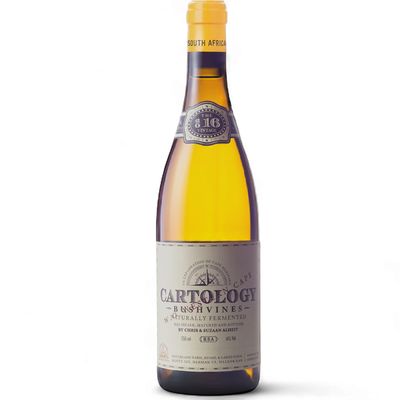
Cartology: Old-vine Chenin Blanc and Semillon, Western Cape
The wine that started it all, and still the project's calling card. Cartology (the name fuses cartography and heritage) is drawn from a rotating tapestry of dry-farmed bush vine parcels across Skurfberg, Piekenierskloof, Malmesbury, Paardeberg, Bottelary, False Bay and Tygerberg, typically finished with a small percentage of old-vine Semillon. Whole-bunch pressed, wild fermented across cement eggs, foudres and old barrels, and matured on lees for around a year, it is regularly cited among the finest white wines South Africa produces.
Magnetic North: Single-vineyard Chenin Blanc, Citrusdal Mountain (Skurfberg)
Sourced from two tiny, dry-farmed, ungrafted parcels on Citrusdal Mountain planted in 1981 and 1984, on iron-rich red sandy soil over clay at 520 metres above sea level. Yields are minute and the wine has become one of the most sought-after single-site Chenins in the Cape, prized for combining real power with real finesse. The 2024 vintage was awarded a perfect 100 points by Tim Atkin MW.
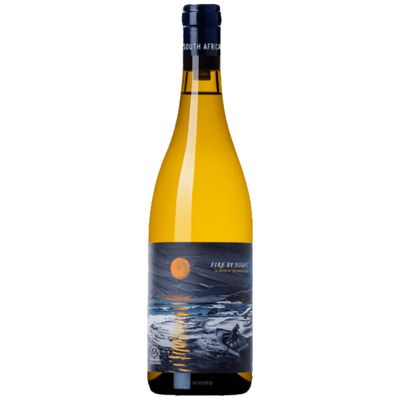
Fire by Night: Single-vineyard Chenin Blanc, Nuwedam, Paardeberg
Grown on Alheit's own Nuwedam farm on granite soils in the Paardeberg, Fire by Night has showcased the Paardeberg and False Bay side of Stellenbosch since its maiden 2017 vintage. Whole-cluster pressed and matured across concrete eggs and foudres, it shows a mineral, flinty character with real tension. The 2023 vintage scored 97 points from critic Neil Martin of Vinous.
Nautical Dawn: Single-vineyard Chenin Blanc, Sinai Hill
Grown on granite soils on Sinai Hill, Nautical Dawn was originally part of the Cartology blend before earning its own bottling. Known for chalky minerality and real energy on the palate, it has drawn some of the highest scores in the range, including a perfect 100 points from Tim Atkin MW for the 2023 vintage.
Huilkrans: Single-vineyard Chenin Blanc, Skurfberg
If Magnetic North is the higher-toned voice of Skurfberg, Huilkrans works on a deeper, richer register from the same mountain. A perennial highlight of the range, it combines power and finesse in a way few other Chenin sites anywhere can match.
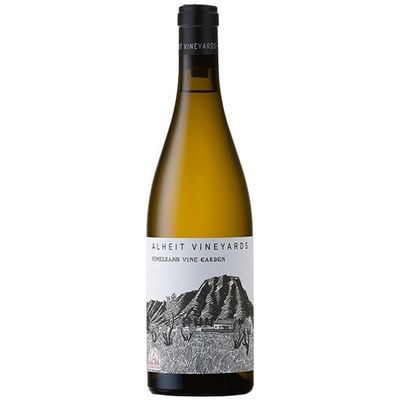
Hemelrand Vine Garden: Roussanne; Chardonnay; Chenin Blanc; Verdelho; Muscat Blanc - Hemel-en-Aarde Ridge
Grown on vines planted in 2010 around the Alheits' own Hemelrand farm on the Hemel-en-Aarde Ridge. Often showing a honeyed edge from a touch of botrytis, balanced by fresh acidity and a viscous, textured palate.
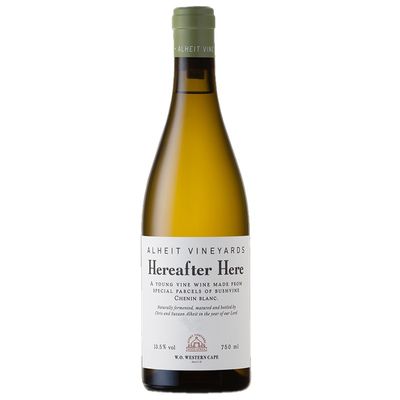
Hereafter Here: Chenin Blanc, from Swartland, Piekenierskloof, Bottelary and Polkadraai
Hereafter Here as a wine designed to showcase younger vineyard parcels that are not yet mature enough for Cartology. A young-vine Chenin Blanc from Alheit Vineyards, brings together parcels from Swartland, Piekenierskloof, Bottelary and Polkadraai, with older-vine parcels from the Paardeberg and Tygerberg. The 2025 vintage received 95 points from Christian Eedes, who described it as “precise, poised and very flavourful"