FREE DELIVERY ON ORDERS OVER R2,000 | UPCOMING EVENTS
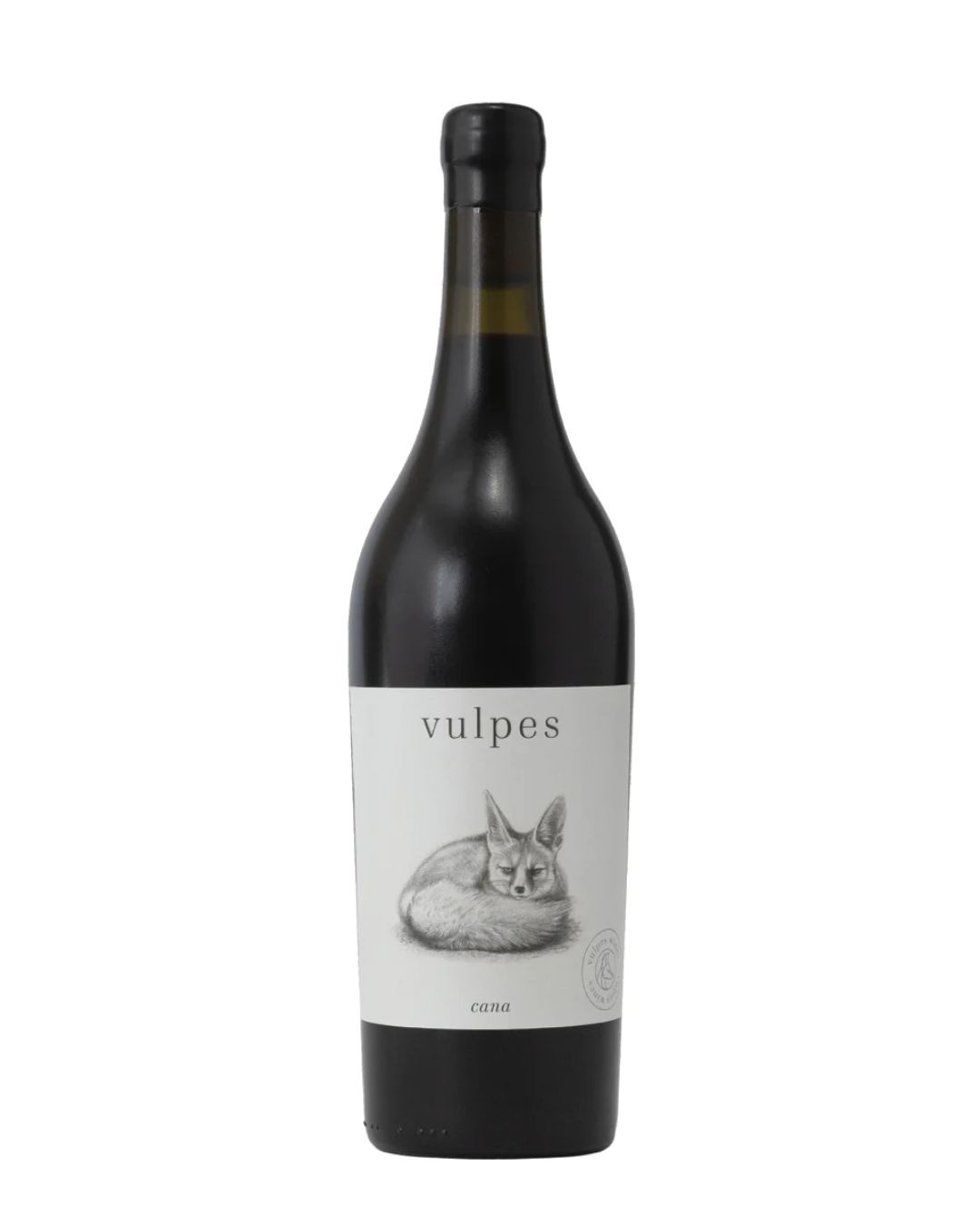
Vulpes Cana Cabernet Sauvignon 2025
R445.00
Price incl. VAT (15%) R58.04
In stock: 6 available
1
Vulpes Cana Cabernet Sauvignon 2025
Product details
The Last Vintage of this Cab Sav - We wont see it again!
Named after Vulpes cana: Blanford’s fox. Blanford’s fox is native to the Middle East, including Iran, Israel, Afghanistan, Egypt, and Pakistan.
Cana is a Cabernet Sauvignon from the Polkadraai Hills of Stellenbosch, grown on decomposed granite at around 200 metres above sea level and planted in 2001. Fermented with an organic yeast isolated from the farm itself and raised in old barrels, it is a firm, dark-fruited red with a granitic spine and the poise to age. Only 1 100 bottles were made.
Cana comes from a Cabernet Sauvignon vineyard in the Polkadraai Hills of Stellenbosch, planted on decomposed granite in 2001 and sitting at approximately 200 metres above sea level. The grapes were picked on 24 February and 100% destemmed, then inoculated with a certified organic yeast that was originally isolated from the very farm on which the grapes are grown, tying the fermentation closely to the place. The fruit is worked very gently during fermentation, with one pigeage (punch down) a day. Once the wine is dry and the cap starts to drop, it is drained off, settled in tank for two days and racked to old 7th and 8th fill 225 litre barrels. Malolactic fermentation completes in barrel, and SO2 is added once it is finished to protect the wine until racking and blending in December. The SO2 is adjusted just before bottling, which took place on 17 January 2026.
Tasting notes: Cana opens with damson, blackberry and cassis, lifted by a waft of clove and a cool breath of mint. The palate is firm, dense and still youthful, built around a core of granitic intensity, with grippy but fine tannins and a dry, focused line of fruit that runs long. Old barrels keep oak firmly in the background, so the fruit and the granite do the talking. It is a Cabernet of tension rather than weight, and one that rewards a degree of patience. Decant if opening in its youth, or give it a few years in the cellar and let the structure unwind.
Food pairing: Cana's firm structure and cassis fruit call for proper red meat. A roast leg or rack of lamb with rosemary and garlic is the natural match, and the hint of mint in the glass echoes the herbs on the plate. Grilled aged ribeye or fillet, slow-braised oxtail, or springbok loin with a red wine jus all have the richness to soften the tannins, while a Sunday braai of lamb chops and boerewors will do the same with less ceremony. For something lighter, try a wild mushroom risotto or a wedge of mature Gouda or Gruyère to finish.
Biodynamic guru Johan Reyneke grows the grapes that Nuschka de Vos buys for her Polkadraai Hills Cabernet Sauvignon. Firm, dense and still youthful, this is a wine that will reward a degree of patience, showing flavours of damson, blackberry and cassis, negligible oak, a waft of clove and mint and a core of granitic intensity. 2028-35. Tim Atkin 92
ANALYSIS: ALC 14.0% | TA 5.5g/L | pH 3.58 | RS 1.2g/L
Customer reviews
Customer reviews
Reviews only from verified customers
No reviews yet. You can buy this product and be the first to leave a review.
Display prices in:ZAR