Damascene Wines
Jean Smit built his winemaking credentials abroad, with harvests in California, Marlborough and Rhone stints alongside Stephane Ogier in Cote-Rotie, before returning to South Africa to work at Rustenberg and then spending close to a decade as head winemaker at Boekenhoutskloof. In July 2017, David Curl, former owner of Chateau Gaby in Bordeaux's Canon-Fronsac, called Jean about making wine on his Elgin apple farm, a project that became Moya Meaker. Two hours into that first conversation the pair realised they wanted to make wine from sites all over South Africa, and within six months Damascene was conceived. The maiden vintage was 2018, made initially in a winery in Sir Lowry's Pass before Damascene moved into its own Elgin cellar in 2020. The name refers to a Damascene moment, an instant of insight that changes everything, and it is exactly what Jean and David set out to capture in the range: not a story about the owners or a marketing trend, but about the vineyards themselves. In his 2023 South Africa report, Tim Atkin MW awarded Damascene First Growth status, placing it alongside Porseleinberg and Sadie Family Wines among the Cape's new icons.
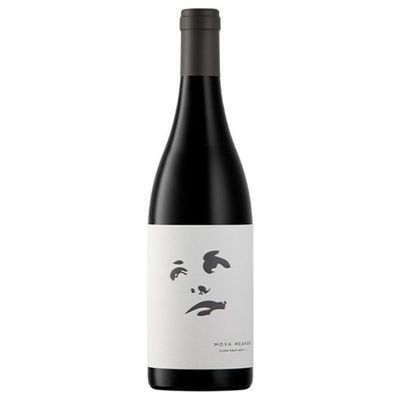
Moya Meaker began in 2010 when Canadian businessman David Curl, former owner of Bordeaux's Chateau Gaby, and his South African-born wife Genevieve Hamilton-Brown bought Habibi, a small apple farm in Elgin. Alongside the orchards were a few existing parcels of vine, and the resulting wines were named for Genevieve's late mother, Moya Meaker, who was crowned Miss South Africa in 1959. Jean Smit, already David's partner on the Damascene project, took on winemaking duties here too, working from the same Habibi cellar. The farm sits at around 300m in an amphitheatre formed by the Hottentots-Holland, Groenland and Kogelberg mountains, on a ridge of ancient Bokkeveld shale, with cool Atlantic breezes and a wide diurnal swing that make Elgin South Africa's coolest wine region and a natural home for Burgundian Pinot Noir and Chardonnay alongside taut, acid-driven Riesling.
Philosophy and Winemaking
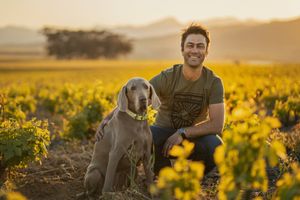
“It’s about the site, the wine, the quality, the vineyards.” Jean puts it simply: if it goes in a bottle, it has to be the best expression of that site he can make.
Every Damascene wine is built around a single Wine of Origin ward, and where more than one vineyard contributes, each site is fermented and matured entirely separately before the final blend is assembled, so every parcel keeps its own distinct voice in the finished wine. Jean farms with sustainability as a condition rather than a marketing line: he works only with growers who share a long-term respect for the land, and has walked away from outstanding vineyard sites over their environmental impact. In the cellar the approach favours native fermentation and a gentle hand with the reds, using tulip-shaped concrete fermenters and the submerged cap technique to build structure without over-extracting, before ageing in a mix of 1000L and 2000L oval Austrian oak foudres and French oak vats depending on the wine.
Every bottle in the range is priced the same, a deliberate choice so that no single wine is rated above another. The result is a set of wines rooted in old bush vine and hillside sites across Stellenbosch, the Swartland, Franschhoek, the Ceres Plateau and the Cederberg, each chosen for a distinct character rather than convenience.
The Range: Site by Site, Story by Story.
The range covers two Chenin Blancs from contrasting sites, a rare old-vine Semillon from Franschhoek, a Stellenbosch Cabernet Franc and Cabernet Sauvignon, and four separate single-region Syrahs from Stellenbosch, the Swartland, the Ceres Plateau and the Cederberg. Each wine carries its Wine of Origin ward in its name, and each is built to be an unmistakable expression of that specific place. Three wines make up the Moya Meaker range, each from its own single vineyard on Habibi Farm: an old, high-density Pinot Noir planted in 2010, a Riesling from vines planted in 2006, and the newest addition, a Chardonnay from vines planted in 2021. All three are shaped by the same Bokkeveld shale and the same cool, cloud-covered site.
WHITES:
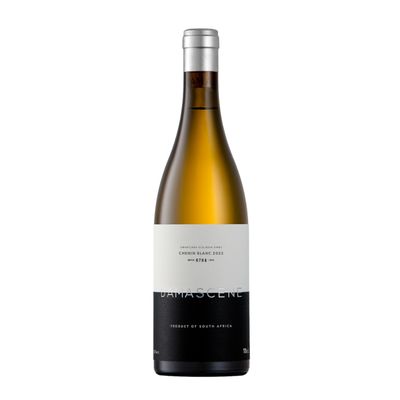
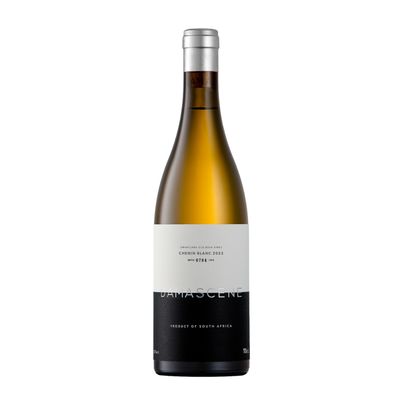
Damascene Swartland Chenin Blanc Old bush vines, Paardeberg granite Sourced from two Paardeberg hilltop sites roughly 37km from the West Coast: one planted in 1971 and 1979 on decomposed granite forced up by ancient dolomite, the other, Jakkalsfontein, planted in 1983 on granite over clay. Hand-harvested and pressed on a delicate champagne cycle, the wine ferments and matures for around 11 months in 1000-litre oval Austrian oak foudres, with malolactic fermentation prevented to protect its natural acidity. Expect spiced peach, fynbos, Seville orange and pineapple, with mandarin and nectarine on the palate and a bitter snap of white grapefruit and white pepper on the finish. The 2023 vintage scored 95/100 from Christian Eedes.
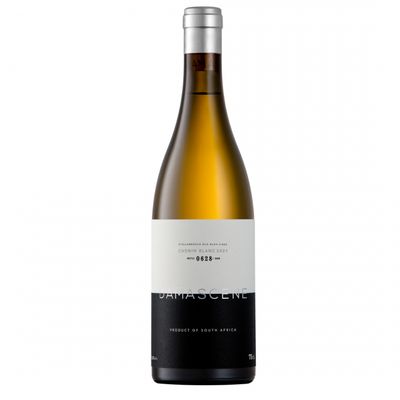
Damascene Stellenbosch Chenin Blanc Old bush vines, Bottelary hilltops A blend of three mountainous Bottelary sites: Sonop, planted in 1982 on shale; Houmoed, planted in 1972 on greywacke; and Mooiplaas, planted in 1981 on granite. Fermented and aged separately before blending, then matured around 11 months in 1000-litre Austrian oak foudres. The wine opens slowly with yellow apple, nectarine, lemon blossom and honeysuckle, deepening into gravel dust, mineral talc and smoky flint, with a long citric finish of lime, quince and nutmeg.
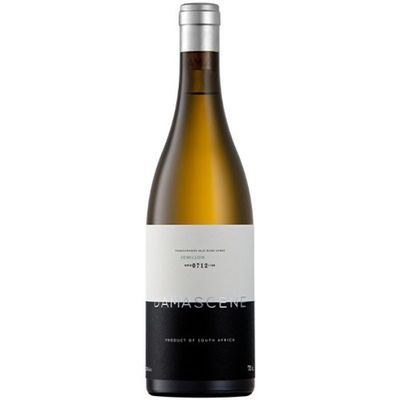
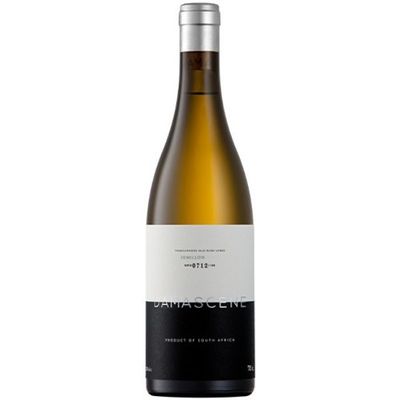
Damascene Franschhoek Semillon Old bush vines, La Chataigne, Franschhoek River From La Chataigne, one of South Africa's oldest Semillon blocks, with bush vines on the banks of the Franschhoek River planted in 1942 and 1962. The wine is a blend of Semillon Blanc with a small portion of the rare Semillon Gris mutation, hand-harvested, whole-cluster pressed and fermented with native yeast before ageing on lees. Mandarin, white blossom, honeyed stone fruit and a savoury lanolin note lead into a creamy, round palate of grapefruit, apricot, peach, crushed stone and toasted hazelnut, framed by taut acidity and a long finish.
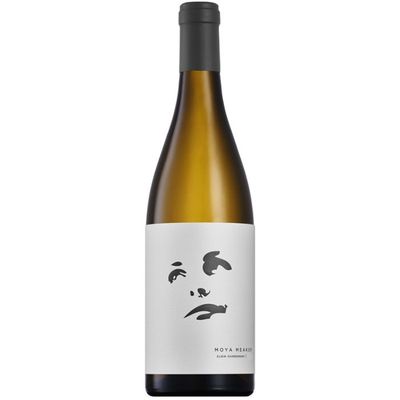
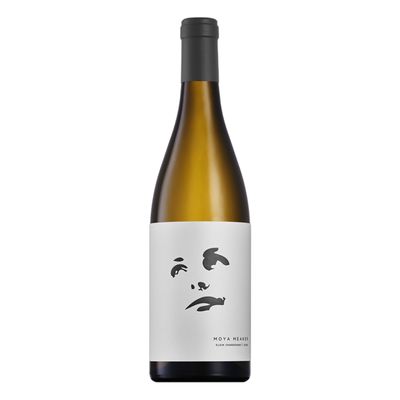
Moya Meaker Chardonnay Single vineyard, Habibi Farm, planted 2021 The newest wine in the range, from vines planted in 2021 across two blocks, one on a cooler southeast-facing slope, the other on a northwest-facing slope chosen to shield the more sensitive clone from the prevailing southeaster. Both are Guyot-trained on Bokkeveld shale. Hand-harvested and whole-bunch pressed on a gentle champagne cycle, the wine ferments and matures around 10 months in 1000-litre foudre. Pear, lime, lemon and floral perfume open onto a mineral core of salty flint, gravel and oatmeal, with the palate staying taut and precise through to a long, pithy finish. The 2024 vintage, its first commercial release, was rated 94/100 by Christian Eedes.
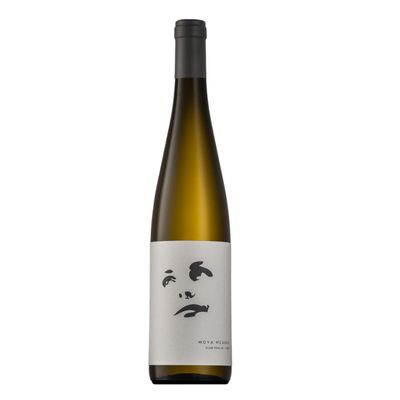
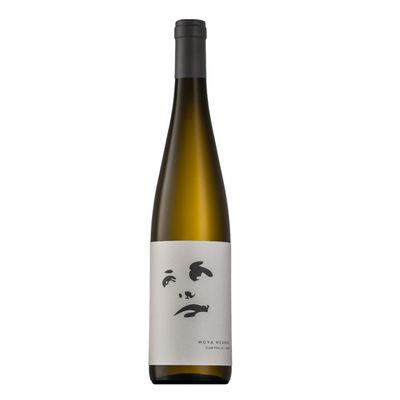
Moya Meaker Riesling Single vineyard, Habibi Farm, planted 2006 From a southwest-facing block planted in 2006 on Bokkeveld shale rich in clay, at around 289m. Hand-harvested early and chilled overnight, the grapes are destemmed and given a short skin contact in a sealed press before settling in concrete; both fermentation and maturation happen in concrete and seasoned Austrian oak, without a single stainless-steel tank in sight. The wine is bottled after around five months on lees, then rests further before release. Lime peel, green apple, peach and jasmine lead into elderflower, orange blossom and a whisper of petrol, with racy acidity and a bone-dry, chalky finish. Made in tiny volumes of around 2,000 bottles a year, and rated as high as 95/100 by Christian Eedes.
REDS:
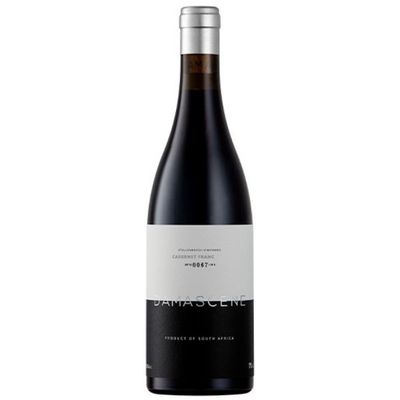
Damascene Stellenbosch Cabernet Franc Single vineyard, Bottelary, planted 2004 From a single east-facing Bottelary vineyard on decomposed granite at 225m, planted with the CF1 clone in 2004. Hand-harvested and cold-soaked as whole berries in tulip-shaped concrete fermenters, fermented with native yeast and matured 11 months in 1000-litre French oak vats. Violets, crushed rose petal, tobacco leaf and pencil shavings meet sweeter blueberry and cassis, with a lithe, red-fruited palate of raspberry, pomegranate and cherry framed by fine plum-skin tannins. Rated 92 points by James Suckling.
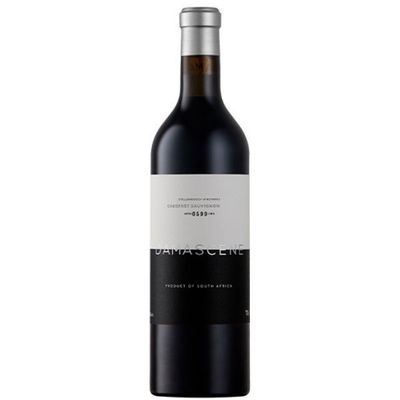
Damascene Stellenbosch Cabernet Sauvignon Three granitic sites, Nuweland, Bottelary and Helderberg Drawn from three contrasting granitic Stellenbosch sites, in Nuweland, Bottelary and Helderberg, facing southeast, west and northeast respectively. A modern take on classic Stellenbosch Cabernet, with cherry, blackcurrant pastille, thyme and eucalyptus opening onto a concentrated yet elegant palate of cassis, black cherry and graphite, finishing savoury with fennel and dried thyme.
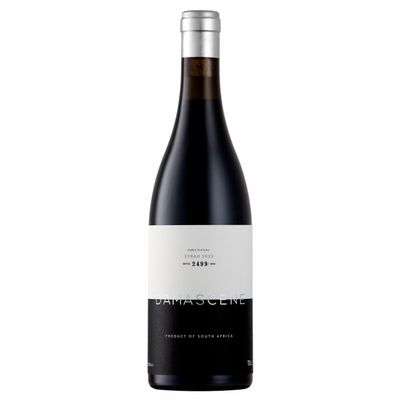
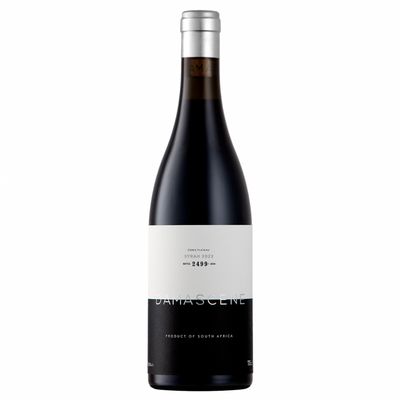
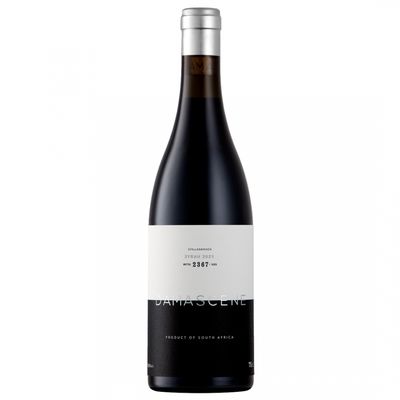
Damascene Stellenbosch Syrah Three vineyards, Polkadraai Hills, Bottelary and Devon Valley A blend of three distinct Stellenbosch sites: a cloud-covered Polkadraai Hills slope planted in 1996, a granitic Bottelary outcrop known as Karibib, and a cooler pocket of Devon Valley on deep Oakleaf soils. Perfumed and spicy, with violets, potpourri and garrigue over dark cherry, plum and scented smoke, gaining backbone from the Bottelary fruit and brightness from Devon Valley's strawberries. One of the range's most consistently high scorers, with the 2023 vintage rated 96/100 by Christian Eedes.
Damascene Swartland Syrah Three vineyards, Paardeberg, Kasteelberg schist and Malmesbury shale Sourced from three Swartland sites at differing altitudes: Jakkalsfontein bush vines on decomposed granite at the foot of the Paardeberg, an exposed schist slope on the western foot of the Kasteelberg, and trellised vines on Malmesbury shale and schist in the heart of the Swartland. Fermented substantially as whole clusters using the submerged cap technique and aged around 11 months in 2000-litre Austrian oak. Red and black fruit meet flint, white pepper and a garrigue lift, with finely sculpted tannins. Widely regarded as the flagship red in the range, the 2020 vintage was rated 98/100 by Christian Eedes.
Damascene Ceres Plateau Syrah Rietfontein and Swaarmoedpas, Bokkeveld shale, 1,000m altitude From two Bokkeveld shale vineyards, Rietfontein and Swaarmoedpas, high in the Witzenberg mountains atop the Ceres Plateau at around 1,000m, one of South Africa's most elevated vineyard sites, where winter snow and a wide diurnal shift bring slow, deliberate ripening. The lightest and most fragrant of the Damascene Syrahs, showing thyme, sour cherry, wild raspberry and balsamic lift over a silky, medium-bodied palate with fine, precise tannins. The 2023 vintage was rated 97/100 by Christian Eedes.
Damascene Cederberg Syrah Driehoek, extreme altitude wilderness site From a remote block on the Driehoek farm at 940m in the wild, rocky expanse of the Cederberg, Cape leopard country, where natural tannins run high. Only 30 to 60% of the fruit is fermented as whole clusters to keep the wine balanced, in tulip-shaped concrete fermenters and 1000-litre conical French oak vats. A powerful, intensely aromatic Syrah shaped by one of the range's most extreme and untouched sites.
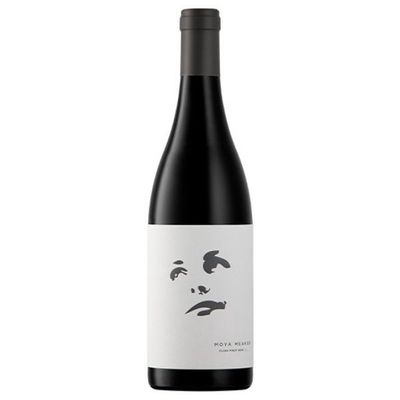
Moya Meaker Pinot Noir Single vineyard, Habibi Farm, planted 2010 Grown across five blocks on a single south to southeast-facing slope, planted in 2010 to the Dijon 667 and 777 clones at high density. Hand-harvested and gravity-fed as whole berries into tulip-shaped concrete fermenters, given around 10 days on skins before maturing roughly 10 to 11 months in 300-litre Burgundian oak barrels, about 20% new. Musk candy, pink rose petal and blood orange lead the nose, with a savoury undercurrent of fynbos and white pepper, while the palate stays pure and precise with tart red cherry, raspberry acidity and fine, firm tannins. Consistently one of the best-value Pinots in the Cape, with recent vintages scoring as high as 95/100 from Christian Eedes.