Leeu Passant Wines
Leeu Passant was founded in 2013, when Swartland winemakers Chris and Andrea Mullineux partnered with Indian businessman and hotelier Analjit Singh, owner of the Leeu Estates property in Franschhoek. The project began almost by accident: for years the couple drove past a neglected roadside vineyard of gnarled old bush vines, later found to be South Africa's oldest registered red-wine vineyard, planted in Wellington in 1900. Around the same time, their longtime viticulturist Rosa Kruger, the figure widely credited with rediscovering and cataloguing the Cape's old vineyards, had spent years pointing them toward remarkable old parcels scattered outside the Swartland, sites the Mullineuxs couldn't use for their existing Mullineux label, which is committed exclusively to Swartland fruit.
Leeu Passant gave them somewhere to put that fruit. Based at a dedicated cellar on Leeu Estates, the label released its first Chardonnays in 2015 and its now-signature Dry Red the year after. Where Mullineux is a study of one region, Leeu Passant ranges more widely across the Cape's old-vine heritage sites in Stellenbosch, Wellington and Franschhoek, built around some of the country's most historic plantings. The name nods to that heritage: a "Lion Passant" is a heraldic term for a walking lion, chosen partly for leeu, Afrikaans for lion, and partly as a nod to Singh's own name, which carries the same meaning in Sanskrit.
Philosophy and Winemaking
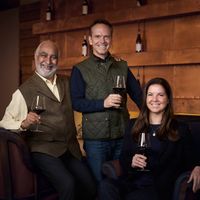
Our aim has always been to craft wines of depth, distinction, and enduring character, says Chris Mullineux, co-owner of Mullineux & Leeu Family wines. “To have our wines recognised at this level reinforces that we’re on the right path, and that the individual vineyards and growers we’ve committed to are expressing themselves with increasing clarity.”
Leeu Passant is often described as a deconstruction and reconstruction of the great Cape wines of the mid-twentieth century, a modern, minimal-intervention take on styles that once defined the Cape, built from parcels old enough to have plausibly supplied those very wines. The Dry Red is the clearest expression of that idea: a blend modelled loosely on the traditional Cape red blends of the 1950s and 60s, sourced from vineyards that could have supplied the originals.
Winemaking across the range stays close to the philosophy that underpins Mullineux: natural fermentation with indigenous yeasts, minimal handling, and only a small amount of sulphur added at bottling. Nothing else is added or taken away. Grapes come from dry-farmed bush vines and old trellised blocks farmed as naturally as possible, several old enough to qualify for Old Vine Project certification. Élevage leans on a mix of 500-litre French oak barrels and larger foudres, chosen to build texture and structure rather than overt oak flavour, with maturation often stretching well beyond a year before blending and bottling.
The Range: Old Vines, Modern Precision
WHITES:
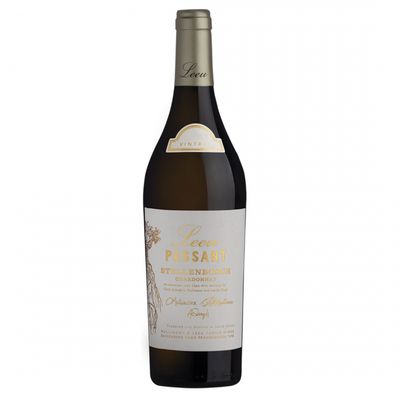
Stellenbosch Chardonnay
Sourced from a single high-altitude vineyard on the Helderberg, picked in stages to build layers of flavour and matured for around a year in French oak, about a third of it new. Vintages consistently show citrus and stone-fruit character with a savoury, saline finish; Platter's rated the 2020 vintage 95/100, and Christian Eedes scored the 2022 at 96/100, praising its density, freshness and chalky length. Aggregated critic scores sit around 93/100 across vintages, among the most consistently high-scoring Chardonnays in the Cape.
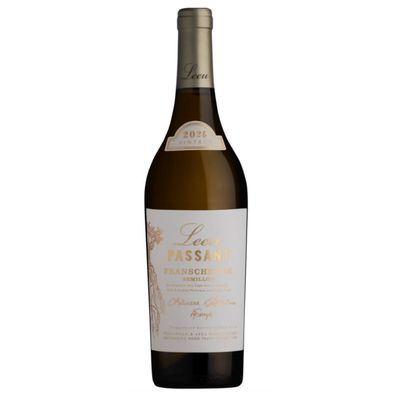
Franschhoek Sémillon comes from a dry-farmed old-vine vineyard planted in 1963, one of the oldest Sémillon sites still producing in the valley. The soil is mostly alluvial sandstone, with pockets of granite appearing on the higher slopes, a mix that gives the wine its naturally high acidity even in a warm vintage. It's a small-volume, single-vineyard wine, very much in keeping with the old-vine, single-site philosophy that runs through the rest of the Leeu Passant range. Fermented and matured entirely in terracotta Amphora, the wine expresses both purity and texture.
REDS:
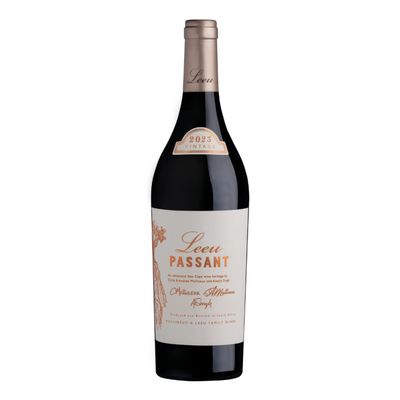
The Leeu Passant Red Blend: (Cabernet Sauvignon, Cabernet Franc, Cinsault)
The flagship, and the wine the label was built around. The Cabernet Sauvignon and Cabernet Franc come from dry-farmed vines on the Helderberg, while the Cinsault is drawn from the 1900-planted Wellington vineyard, South Africa's oldest registered red-wine site. The blend proportions shift with the vintage, but the wine has consistently drawn some of the highest scores of any South African red: Tim Atkin rated the 2017 at 96/100, calling it a true modern classic, and the 2019 picked up 96/100 from Platter's and 95/100 from Tim Atkin. Expect bergamot, dark cherry, violets and bramble on the nose, with firm, fine tannins and a long, savoury finish built to age for a decade or more.
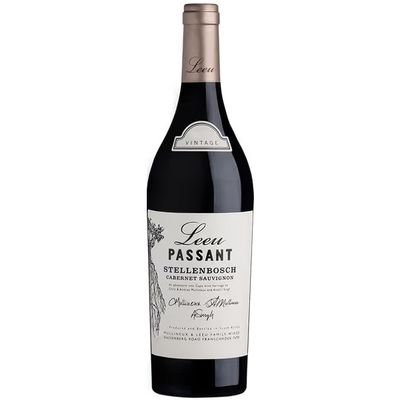
Stellenbosch Cabernet Sauvignon
A single-variety expression from dry-farmed vines on the Helderberg and a parcel in Firgrove, some pushing 40 years old. Aromatic and structured, with aggregated critic scores averaging around 92/100 across vintages and climbing to 94/100 for the standout 2022. Expect bramble, cassis, olive and dried herb, framed by fine, firm tannins.
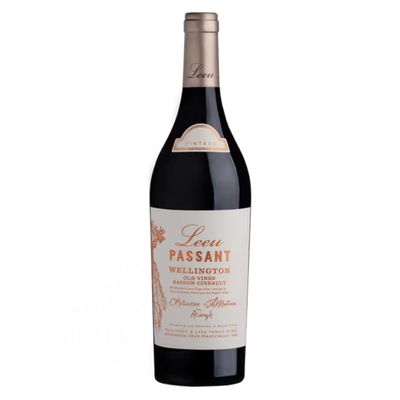
Wellington Old Vines Basson Cinsault
From the same historic 1900 vineyard that anchors the Dry Red, bottled here on its own: 100% whole-cluster fermentation, extended maceration, and around 20 months in used French oak. The wines are typically fragrant and finely structured, showing red cherry, pomegranate, dried rose petal and a distinctive Turkish-delight character that's become something of a signature for the site, carried by silky, polished tannins. Platter's rated the 2020 vintage 95/100.