Van Loggerenberg Wines
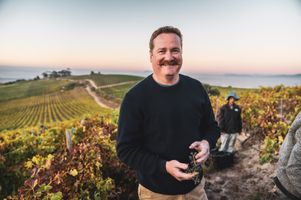
Lukas van Loggerenberg grew up in Rawsonville in the Breede River Valley, a farming town better known for brandy than fine wine, in a family he has said was not wealthy, something he now credits with teaching him the value of hard work. He trained at Elsenburg Agricultural College before working two harvests at a small winery in Connecticut's Western Connecticut Highlands AVA, then returned home to cut his teeth at Rijk's in Tulbagh and Druk My Niet Estate in Paarl. The turning point came in 2015, on a trip to the Loire Valley with his former college roommate and now Boschkloof winemaker Reenen Borman. A tasting of an old Cabernet Franc in the dim cellar of Domaine de la Chevalerie convinced him to resign his job and go it alone.
He released his first vintage in 2016, working from a makeshift shed on a Devon Valley hilltop with wife Roxanne handling the business side, before sharing a cellar with friend Franco Lourens of Lourens Family Wines. Today Lukas makes his wines from a cellar on Paarl Mountain, sourcing fruit mainly from Stellenbosch and the Swartland, with parcels also drawn from Franschhoek.
Lukas does not own a single vineyard. Instead he has talked his way into some of the Cape's most storied old-vine sites, from a 1932 Cinsault block in Franschhoek to the granite-laced Karibib vineyard in the Polkadraai Hills that he now shares with several of South Africa's most admired young winemakers. His rise has been rapid: Tim Atkin MW named him Young Winemaker of the Year in 2018 and has since ranked him a consistent First Growth producer, and in 2024 Lukas was inducted into the Cape Winemakers Guild, a distinction held by only around 40 South African winemakers. In its Top 100 Wines of 2025, Vinous named his 2024 Graft Syrah the number two wine in the world, out of more than 35,000 wines reviewed.
Philosophy and Winemaking
“Freshness and purity are paramount. I want to express vineyard sites with elegance,” Lukas says of the style he chases in every wine.
Lukas describes himself as more of a farmer than a winemaker, and his cellar approach reflects it: everything is hand-harvested, fermented with native yeast, and bottled without fining or filtration, with sulfur dioxide the only addition he allows himself. Vineyards are largely dry-farmed and follow organic principles, and Lukas stays closely involved in the vineyard work itself rather than simply buying in fruit. Stylistically the wines lean on his love of the Loire Valley: elegant, light on new oak, and built around freshness, texture and site rather than power. Concrete, old French oak, foudres and demi-muids do the ageing, with new wood kept to a minimum across the whole range.
That ethic of graft, and the camaraderie of the friends and family who helped him build the label, runs through the wines themselves. Nearly every bottle carries a personal story in its name and label art: Break a Leg marks the two knee surgeries Lukas endured during his chaotic first 2016 harvest; Kameraderie is named for the community of growers, workers and friends behind every bottle; Geronimo captures the leap of faith of leaving a steady job to go it alone; and Graft nods both to his grandfather's advice about hard work and to the viticultural technique of joining one vine to another. Lukas is not precious about single-vineyard purity for its own sake either. Where Trust Your Gut blends fruit from two contrasting granite sites in the Swartland and Stellenbosch, his instinct told him the blend would tell a better story of place than either site could alone, hence the name.
The Range: Old Vines, Instinct, Camaraderie
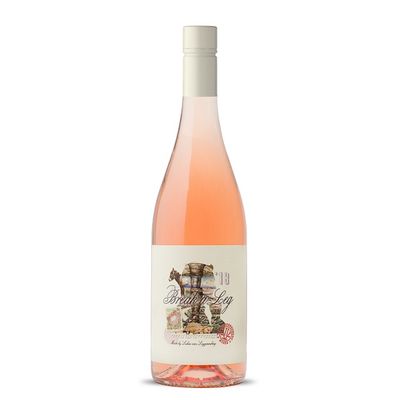
The range runs to three whites and six reds, built almost entirely around Chenin Blanc, Cinsault, Cabernet Franc and Syrah, the varieties Lukas keeps returning to as the truest expressions of the old bush-vine sites he works with. Two entry-level Break a Leg bottlings (a Chardonnay and a Merlot) offer an easy way into the label, Kameraderie and Trust Your Gut showcase old-vine Swartland and Stellenbosch Chenin, and Breton, Geronimo, Lotter, High Hopes and Graft make up a run of site-specific reds that has made Lukas one of the most decorated young winemakers in the Cape. Total production across the range sits at around 2,500 cases a year, all organically farmed and largely dry-farmed old bush vines.
WHITES:
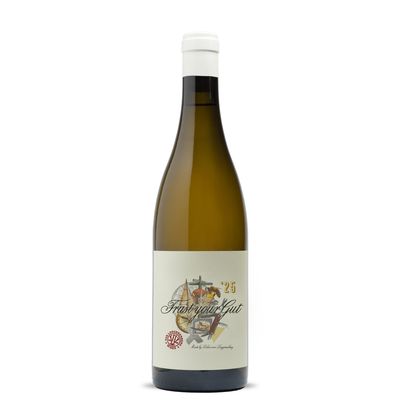
Van Loggerenberg ‘Trust Your Gut’ Chenin Blanc
Two vineyards, Paardeberg granite and Polkadraai granite
A wine born from Lukas's instinct that two contrasting granite sites would tell a better story blended than apart. 65% comes from the Uitvlug farm in Joubertskloof on the western Paardeberg (43-year-old vines, decomposed granite over clay), the other 35% from the famed Karibib vineyard in the Polkadraai Hills (37-year-old vines, granitic sand). Whole-bunch pressed and fermented separately in neutral 500-litre French demi-muids with malolactic fermentation blocked, the two parcels rest ten months on gross lees before blending. Citrus and juicy stone fruit lead, with chamomile and raw honey adding texture without weight. The current vintage scored 96/100 from Christian Eedes and 92/100 from both Tim Atkin MW and James Suckling.
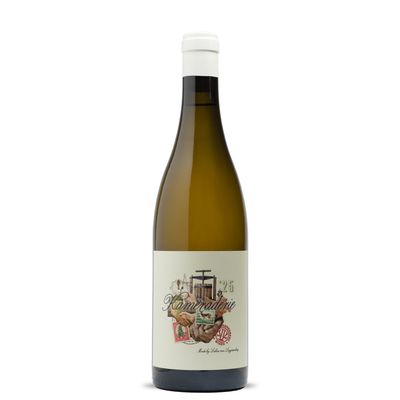
Van Loggerenberg ‘Kameraderie’ Chenin Blanc
Old bush vines, Lammershoek and Uitvlucht, Paardeberg
Named for the camaraderie Lukas sees running through every stage of winemaking, from grower to cellar to the table it is shared on. Around 80% comes from the Lammershoek vineyard on the Paardeberg (58-year-old bush vines), the balance from the neighbouring Uitvlucht vineyard (44-year-old vines), both on decomposed granite. Hand-harvested and whole-bunch pressed, 80% to concrete and 20% to old French oak, the wine ferments spontaneously and matures ten months on lees before bottling unfined and unfiltered. Zesty citrus and creamy vanilla meet hazelnut and ripened peach, with the structure to age for a decade or more. Rated 95/100 by Christian Eedes, 94/100 by Tim Atkin MW and 94/100 by Vinous, which called it one of Lukas's best cuvees of the vintage.
REDS:
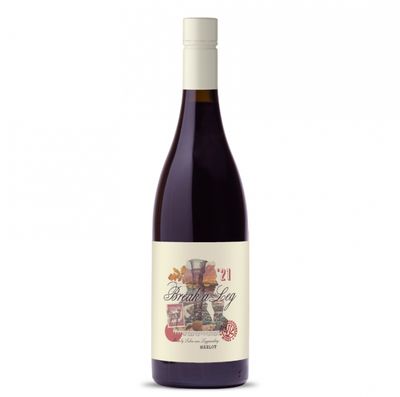
Van Loggerenberg ‘Break a Leg’ Merlot
Two vineyards, Stellenbosch Kloof and Devon Valley
The red half of the Break a Leg pairing, a Monday-night wine Lukas never planned to make until an outstanding vineyard source changed his mind. Around 70% comes from the Demorgenzon vineyard in Stellenbosch Kloof (20-year-old vines) and 30% from Fransmanskraal in Devon Valley (17-year-old vines), both on clay-rich granite. The grapes are destemmed and fermented naturally with a daily pump-over for three weeks, then aged eleven months in third-fill French barriques through malolactic fermentation. Black fruit forms the core, lifted by mint, cocoa and tobacco, structured enough to satisfy Cabernet drinkers without the Cabernet price tag.
Van Loggerenberg ‘Geronimo’ Cinsault
Old bush vines, Rustenhof, Firgrove, Stellenbosch
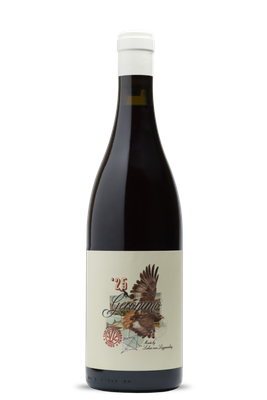
Named for the leap of faith Lukas took leaving steady employment to make wine on his own. Made from Rustenhof, a 50-year-old bush-vine site in Firgrove on decomposed granite considered one of Stellenbosch's grand cru vineyards, the grapes are fermented roughly 60% whole-bunch with daily hand punchdowns, then basket-pressed after three weeks to old 500-litre French oak for eight months, bottled early to preserve Cinsault's piquant, crunchy fruit. Red cherry and cranberry lead the nose, with pink peppercorn, pink grapefruit and pomegranate emerging on a linear, brisk palate that finishes long and saline. Scored 94/100 by Christian Eedes and 93/100 by Tim Atkin MW.
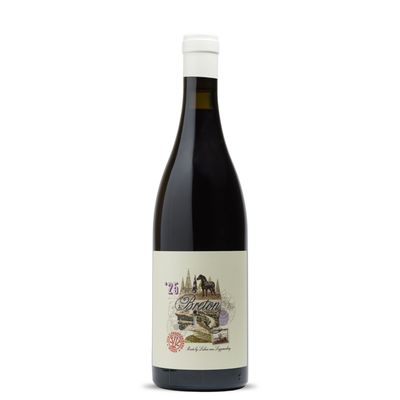
Van Loggerenberg ‘Breton’ Cabernet Franc
Two vineyards, Klein Welmoed and Bluegum Grove, Polkadraai
Breton is the old French name for Cabernet Franc in the Loire Valley, chosen because it was on a Loire trip that Lukas and Roxanne decided to start the label. Some 75% is drawn from the Klein Welmoed vineyard on the southern Polkadraai (19-year-old vines) and 25% from Bluegum Grove, the very first vineyard Lukas ever sourced (15-year-old vines), both on decomposed granite with ferrocrete topsoil. A quarter of the fruit ferments as whole bunches, the rest destemmed, with a single daily punchdown over nine weeks total before pressing to a mix of concrete and used 500-litre French puncheons for eleven months. Ripe blackberry and plum meet cedar and violets, with fine, gripping tannins and a long, drying finish. Tim Atkin MW rates it among the Cape's finest expressions of the variety at 96/100, Platter's scored it 94/100, and Vinous 93/100, likening it to a Loire doppelganger.
Van Loggerenberg ‘High Hopes’ Red Blend
Syrah and Grenache, Swartland schist and shale
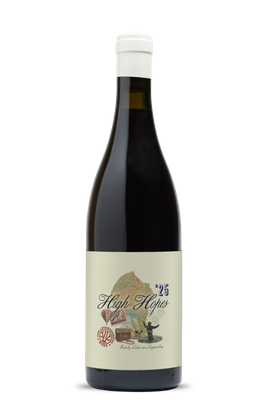
A name Lukas had held onto for years before it found its wine, a Syrah-led Swartland blend built for optimism. 94% Syrah comes from the Ongegund vineyard (17-year-old vines on blue slate and schist, the soil that also defines the iconic Porseleinberg), the remaining 6% Grenache from a 28-year-old block at Fairview on iron-rich shale. Both are dry-farmed and fermented 100% whole-cluster, macerating 17 days before ageing 11 months in equal parts concrete and neutral 500-litre French demi-muid. Blackberry, damson plum and black cherry meet cracked pepper and Kalamata olive, with a saline edge and fine, mouthwatering tannins. Vinous rated the 2024 vintage 96/100, calling it laser-focused and possibly the best vintage yet, with Tim Atkin MW at 94/100 and Christian Eedes at 93/100. 2025 Vintage is 100% Syrah.
Van Loggerenberg ‘Lötter’ Cinsault
Single vineyard, La Terra de Luc, Franschhoek, planted 1932
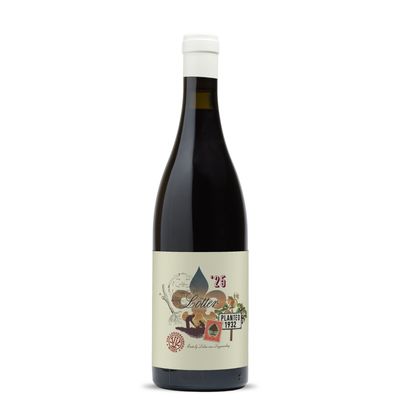
Sourced from a single block planted in 1932 by Koos Lotter, a Stellenbosch University horticulture lecturer better known for his manual on South African fig production, making it the country's second-oldest red wine vineyard still in production. The 89-year-old vines grow on clay-rich iron soils in Franschhoek and are fully destemmed, fermented in stainless steel with two weeks of gentle maceration, then aged ten months in Italian concrete eggs before bottling unfined and unfiltered. Plum and cherry meet wet earth and black pepper, with finely interwoven tannins and an unusually long finish for the variety. Tim Atkin MW rated it 95/100, praising its purity and nuance, with Christian Eedes at 93/100 and Vinous at 92/100, calling the debut a very fine wine.
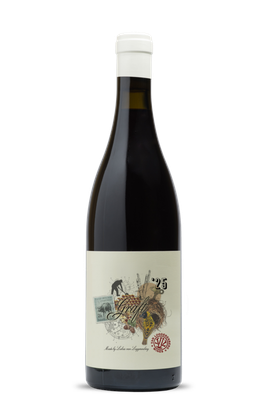
Van Loggerenberg ‘Graft’ Syrah
Single vineyard, Karibib, Polkadraai Hills, Stellenbosch
Lukas's flagship, and the wine that has done the most to build his reputation. The name nods both to his grandfather's advice that success takes hard work, and to the viticultural technique of grafting one vine onto another to build a stronger whole. It comes from the celebrated Karibib vineyard, a site Lukas now shares with several of the Cape's most admired young winemakers, farmed on decomposed granitic sand at 16 years of age. The fruit is hand-harvested, fermented 100% whole-bunch with daily foot-treading over 21 days, then pressed to 70% concrete and 30% second-fill French oak for eleven months. Black pepper, dried rosemary, oregano and olive tapenade lead into a medium-bodied palate with a fine mineral dusting and tannic frame. Tim Atkin MW considers Karibib one of the Cape's most exciting vineyards and rates Graft as world class at 96/100, with Vinous's Neal Martin scoring recent vintages as high as 97/100. The 2024 vintage was named the number two wine in the world by Vinous in its Top 100 Wines of 2025, chosen from more than 35,000 wines reviewed.